
Case Study / Retail Window Film Activation
UNIQLO Heattech NYC Flagship Window Film Activation
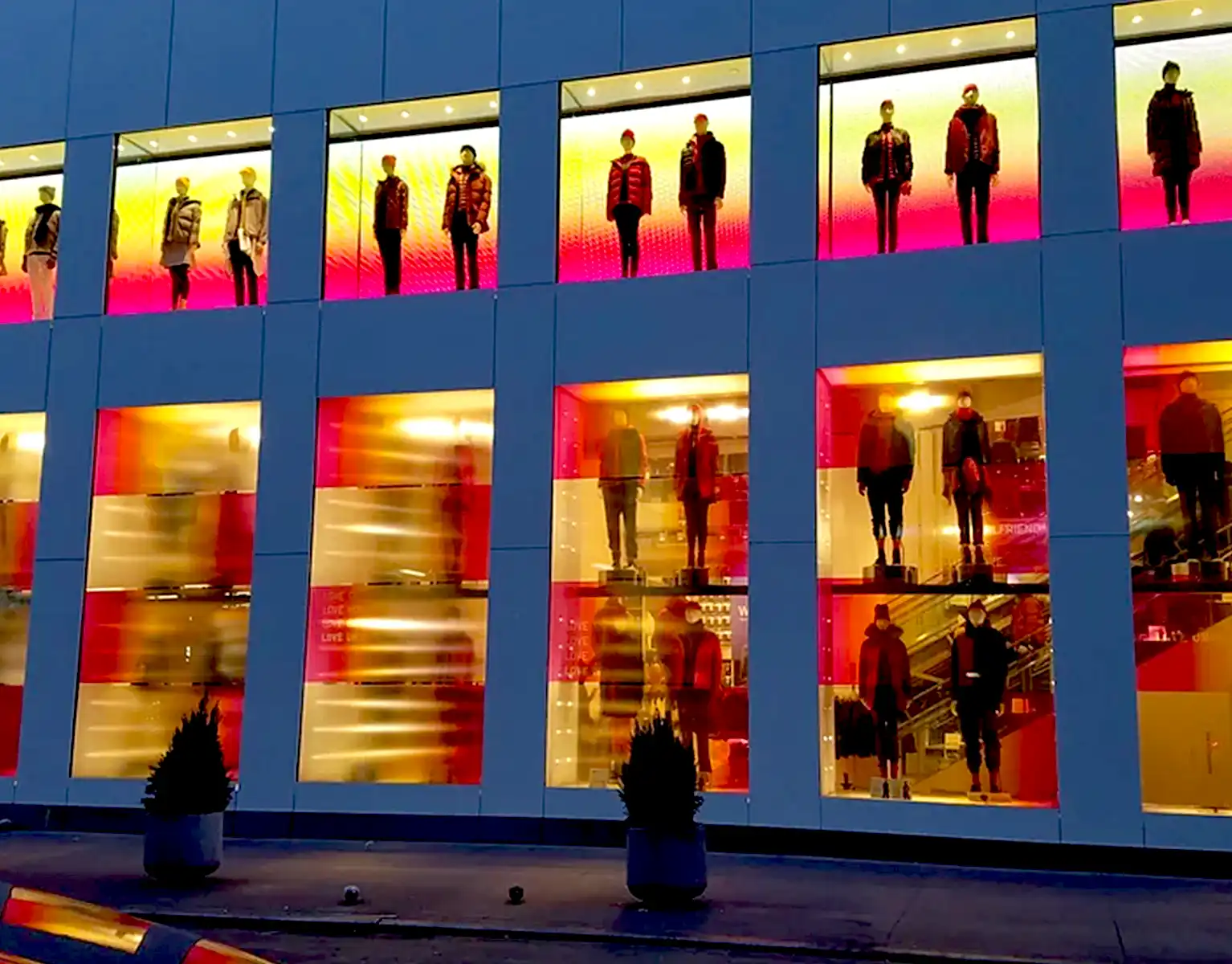
For UNIQLO's Heattech campaign, three New York City flagship stores were transformed into immersive retail environments using color, glass, optical film, and site-specific spatial graphics.
Lux Graphic Imaging was credited as part of the Lumisty and color film production team for the activation, supporting a high-visibility retail experience where window film became part of the architecture, not just a surface graphic.
Project Snapshot
Project Snapshot
- Client
- UNIQLO USA
- Creative Direction / Design
- Mona Kim Projects
- Production Credit
- Glassfilm Enterprises, Lux Graphic Imaging
- Location
- New York City flagship stores
- Store Context
- 5th Avenue, SoHo, and 34th Street flagship environments
- Project Type
- Retail brand environment, architectural window film, color film, in-store activation
- Primary Materials
- Transparent gradient film, Lumisty view-control film, dichroic optical film, vinyl, and lightbox graphics
- Core Lux Relevance
- Window film, color film, architectural glass graphics, retail environmental graphics, production support, and install-ready commercial graphics
Retail Brand Environment
A retail brand environment built around color, warmth, and glass.
UNIQLO's Heattech campaign was not designed as a standard seasonal display. The project called for a high-impact spatial transformation that could express the feeling of warmth across multiple flagship retail environments in New York City.
The creative concept centered on the sensorial power of color. Gradient color, optical film, transparency, and light were used to turn glass and architectural surfaces into immersive brand elements. Rather than relying on traditional signage alone, the activation used film and supergraphics to create a physical retail experience that changed as customers and pedestrians moved through the space.
For Lux Graphic Imaging, this project connects directly to the company's strengths in commercial window film, architectural graphics, retail environments, and high-visibility production work.
Lux Role
Lux Graphic Imaging's role.
Lux Graphic Imaging is credited as part of the Lumisty and color film production team for the UNIQLO Heattech brand experience. The project is an important example of Lux's film and glass expertise, showing how specialty materials can be used to transform storefronts and interiors into immersive brand environments.
Lux's project archive notes the production and installation of custom transparent gradient film, dichroic film, and Lumisty for UNIQLO's New York flagship window program. These materials helped create shifting color, controlled visibility, and a more dynamic relationship between the public, the glass, and the retail space.
This type of work reflects what Lux continues to support today: custom window film, storefront graphics, branded glass, retail environmental graphics, architectural finishes, and large-format commercial graphics for brands, agencies, and visual merchandising teams.
Material Strategy
The material strategy behind the activation.
The strength of the UNIQLO Heattech activation came from the way materials were used as part of the spatial experience. Film, glass, color, and light worked together to create movement, warmth, and visual interaction throughout the flagship stores.
Transparent Gradient Film
Transparent gradient film was used to create smooth transitions of color across glass and architectural surfaces while preserving light, visibility, and depth.
Lumisty View-Control Film
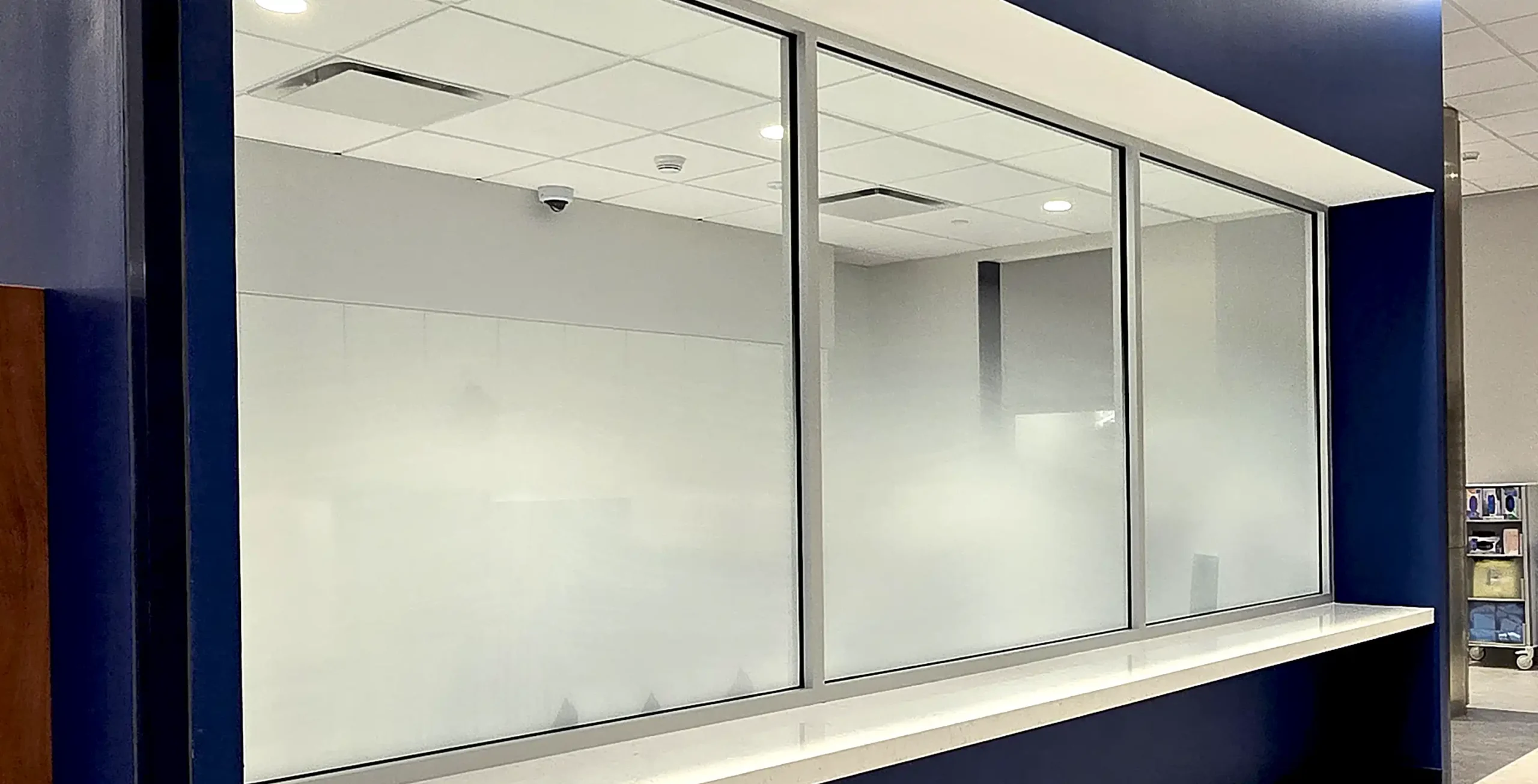
Lumisty is a directional view-control film that can shift from clear to translucent depending on the viewing angle, creating a kinetic effect as customers move past the glass.
Dichroic Optical Film
Dichroic optical film changes color based on light and viewing angle, allowing the retail environment to feel different depending on where the viewer stands.
Vinyl and Lightbox Graphics
Vinyl and illuminated display graphics helped extend the campaign beyond the glass, reinforcing the Heattech message throughout the in-store environment.
The Challenge
The project needed to transform multiple flagship retail locations without treating the windows as simple advertising space. Each store had its own architecture, sightlines, pedestrian flow, interior lighting, and glass conditions.
The graphics needed to support the Heattech campaign message while creating an experience that felt immersive, premium, and site-specific.
The Solution
The activation used architectural film as a design material. Color film, Lumisty view-control film, dichroic optical effects, vinyl, and lightbox graphics were integrated into the retail environments to create a layered spatial experience.
The result was not a single flat graphic. It was a multi-surface brand environment where the glass responded to light, angle, transparency, and movement.
The Result
The UNIQLO Heattech activation transformed New York City flagship stores into bold, color-driven brand environments. Transparent gradient film, Lumisty, dichroic optical film, and large-scale retail graphics created a visual experience that changed with movement and light.
For Lux Graphic Imaging, the project remains a strong proof point for high-end retail window film and architectural glass graphics.
Why It Matters
Why this project still matters.
Retail graphics are most effective when they do more than fill space. The best brand environments use materials, architecture, and production details to shape how people move, look, and feel inside a space.
The UNIQLO Heattech activation is a strong example of that idea. It shows how window film and architectural graphics can support a national brand campaign, create an immersive customer experience, and turn flagship retail glass into a high-impact design feature.
For retail brands, visual merchandising teams, agencies, and commercial property teams, the lesson is clear: glass is not just a boundary. With the right film, color strategy, and production planning, it can become one of the most powerful surfaces in the environment.
Related Lux Services
Related Lux services.
Custom printed film, color film, privacy film, perforated film, and branded glass graphics for storefronts, offices, and commercial interiors.
Retail GraphicsEnvironmental graphics, storefront campaigns, in-store displays, wall graphics, POP visuals, and branded retail spaces.
Large Format PrintingOversized print production for windows, walls, banners, rigid panels, backlit displays, barricades, and commercial environments.
Architectural Finishes & Surface CoveringsPremium surface films and architectural coverings for walls, doors, elevators, columns, millwork, glass, and commercial interiors.
Acrylic & Rigid Interior GraphicsAcrylic panels, rigid graphics, mounted displays, direct-to-substrate prints, and interior brand systems.
Buyer Education
Planning a retail window film or brand environment project?
Projects like this require more than a print file. Before production begins, teams need to think through the glass condition, viewing distance, lighting, material type, film behavior, installation sequence, and long-term use of the space.
- Whether the project needs printed film, transparent film, perforated film, privacy film, or specialty film
- How graphics will look from the interior and exterior
- Whether the application is temporary, seasonal, or long-term
- How artwork should be pane-mapped across multiple glass sections
- What installation conditions may affect the final result
- How to prepare files, measurements, site photos, and production notes for quoting
Start Your Project
Ready to transform glass into a brand experience?
Lux Graphic Imaging works with brands, agencies, retailers, corporate offices, and commercial teams that need premium window film, storefront graphics, retail environmental graphics, and large-format production support.
Tell us what you are building, where it is going, and when you need it. We can help guide the material path, production details, finishing requirements, and install-ready approach.
Project references: Mona Kim Projects UNIQLO Heattech Brand Experience and Lux Graphic Imaging project archive. If Mona Kim Projects photography is used, confirm image permissions and photography credit requirements before publishing. The Mona Kim Projects page credits the photography to Charles Griffin.