Large Format Printing
What to Know Before Ordering Large Format Graphics for a Branded Space
Large format graphics should be planned around the finished environment, not only the output device. Surface, scale, viewing distance, lighting, durability, finishing, and installation access all shape the right production path. Begin with the…
Large format graphics should be planned around the finished environment, not only the output device. Surface, scale, viewing distance, lighting, durability, finishing, and installation access all shape the right production path.
Begin with the environment, not the printer.
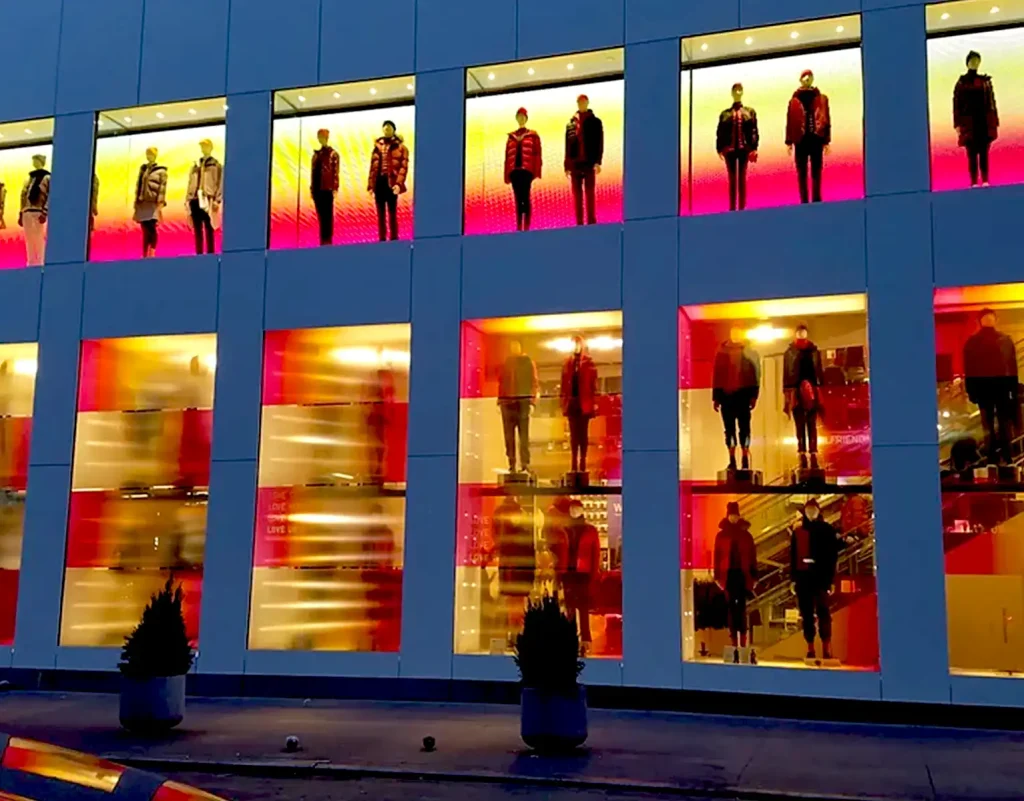
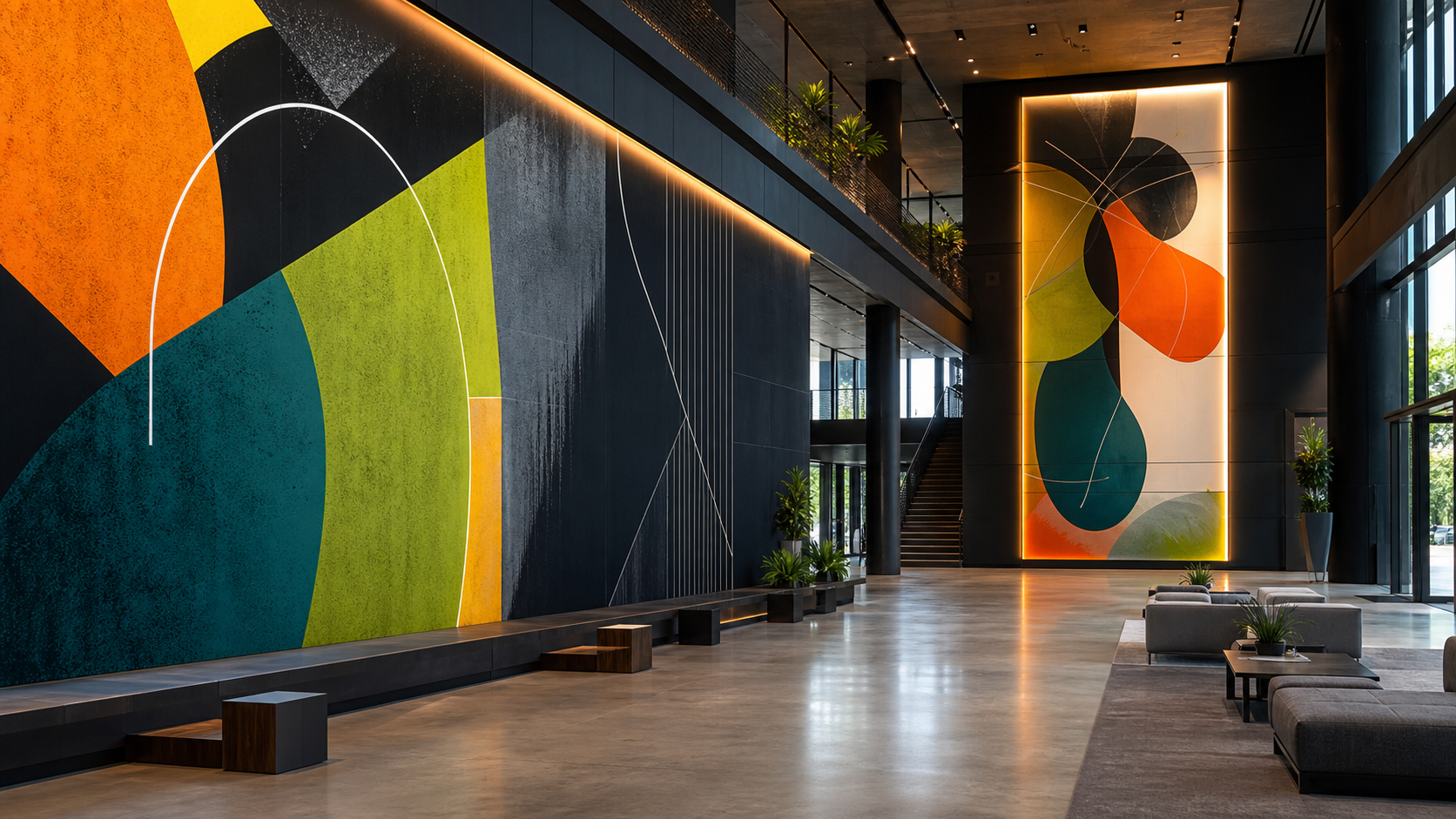
Large format graphics are judged in the space where they live. A wall mural viewed from six feet away, a backlit display in a theater, and a construction barricade seen from traffic all require different decisions. Start by documenting the surface, scale, lighting, expected viewing distance, duration, and installation access.
Explore the production category on the Large Format Printing pillar, then use the Work archive to see how materials can appear in real commercial settings.
Choose the output around the job.
- Flexible media for banners, wallcoverings, mesh, and temporary campaigns.
- Rigid substrates for panels, signs, mounted displays, and directional graphics.
- Backlit films and fabrics where even illumination and color density are critical.
- Floor and surface films selected for wear, finish, removal, and safety requirements.
- Exterior materials matched to weather, wind load, mounting, and expected service life.
Design for the real viewing distance.
Artwork that looks sharp on a monitor may not communicate at architectural scale. Simplify hierarchy, protect key copy from seams and hardware, and check the size of important text from the actual viewing position. High-resolution source files matter, but effective scale and contrast matter just as much.
Plan finishing and installation early.
Hems, grommets, pole pockets, laminate, mounting hardware, panel seams, contour cuts, and edge finishing should be part of the specification before production. Installation conditions can also determine how artwork is split, labeled, packed, and delivered.
For multi-location work, control versions.
Use a location matrix that connects each site to its dimensions, artwork version, quantities, shipping information, and installation notes. Retail teams can use the companion Retail Graphics Rollout Checklist for a more detailed handoff structure.
What to include with a quote request.
Send dimensions, quantities, installation address, desired completion date, site photographs, substrate information, artwork status, intended duration, and any finishing or installation requirements. If the substrate or product category is still unclear, begin at the Services navigation hub or review the FAQ.