Window Film
How to Plan a Commercial Window Film Project Before Production Starts
A successful commercial window film project begins with the glass, the visual goal, and the conditions around the installation. Define privacy, branding, visibility, lighting, measurements, and timing before the artwork enters production. Start with…
A successful commercial window film project begins with the glass, the visual goal, and the conditions around the installation. Define privacy, branding, visibility, lighting, measurements, and timing before the artwork enters production.
Start with what the glass needs to accomplish.
A commercial window film project can support privacy, branding, promotion, solar control, wayfinding, or a combination of those goals. Define the primary job first. That decision helps determine whether the project needs printed film, perforated film, translucent film, cut vinyl, view-control film, or a decorative architectural solution.
For a broader look at available applications, visit Custom Window Film. Teams planning walls, doors, columns, or other interior surfaces should also review Architectural Finishes & Surface Coverings.
Document the glass and its environment.
- Record the visible width and height of every glass panel.
- Note mullions, handles, locks, sensors, seams, and obstructions.
- Identify whether graphics will be installed on the first or second surface.
- Photograph the glass straight-on and from normal viewing angles.
- Document interior and exterior lighting, reflections, and expected viewing distance.
- Confirm access, working hours, lift needs, and building restrictions.
Match the film to visibility and privacy goals.
Printed and opaque film
Use printed or opaque films when image density and brand color are the priority. These applications can create strong storefront campaigns or convert transparent glass into a controlled visual surface.
Perforated film
Perforated film can present an exterior-facing image while preserving a degree of visibility from the darker side. Lighting balance matters, so evaluate the actual environment rather than relying on a generic expectation.
Privacy and decorative film
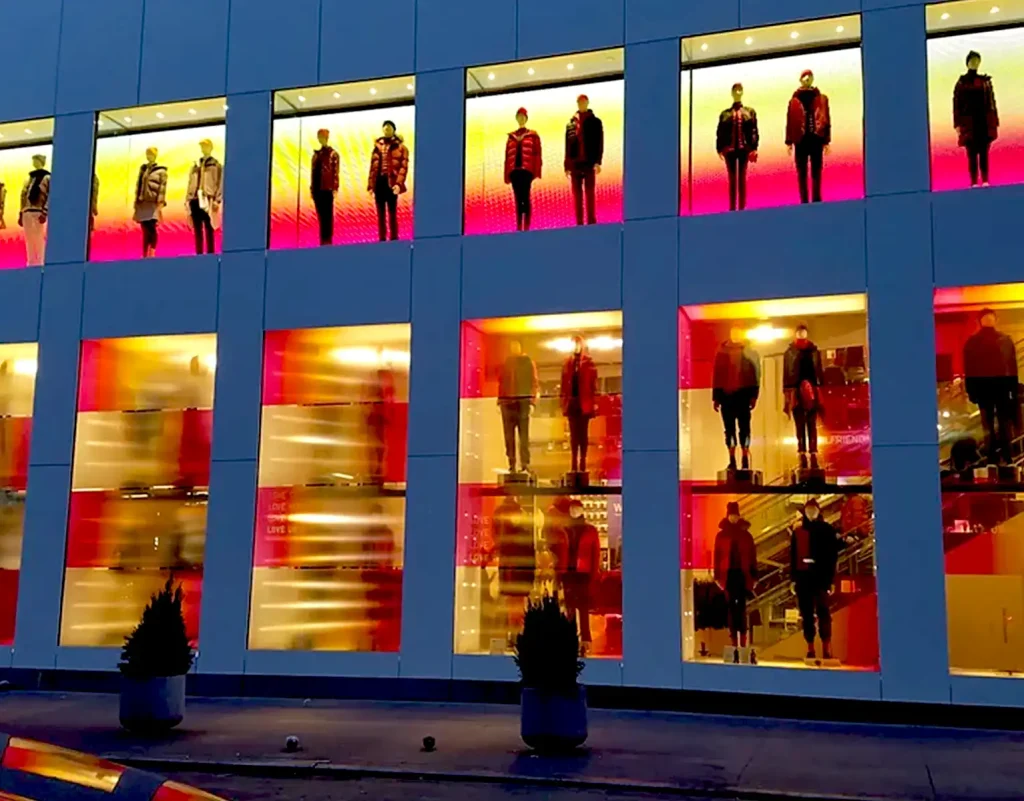
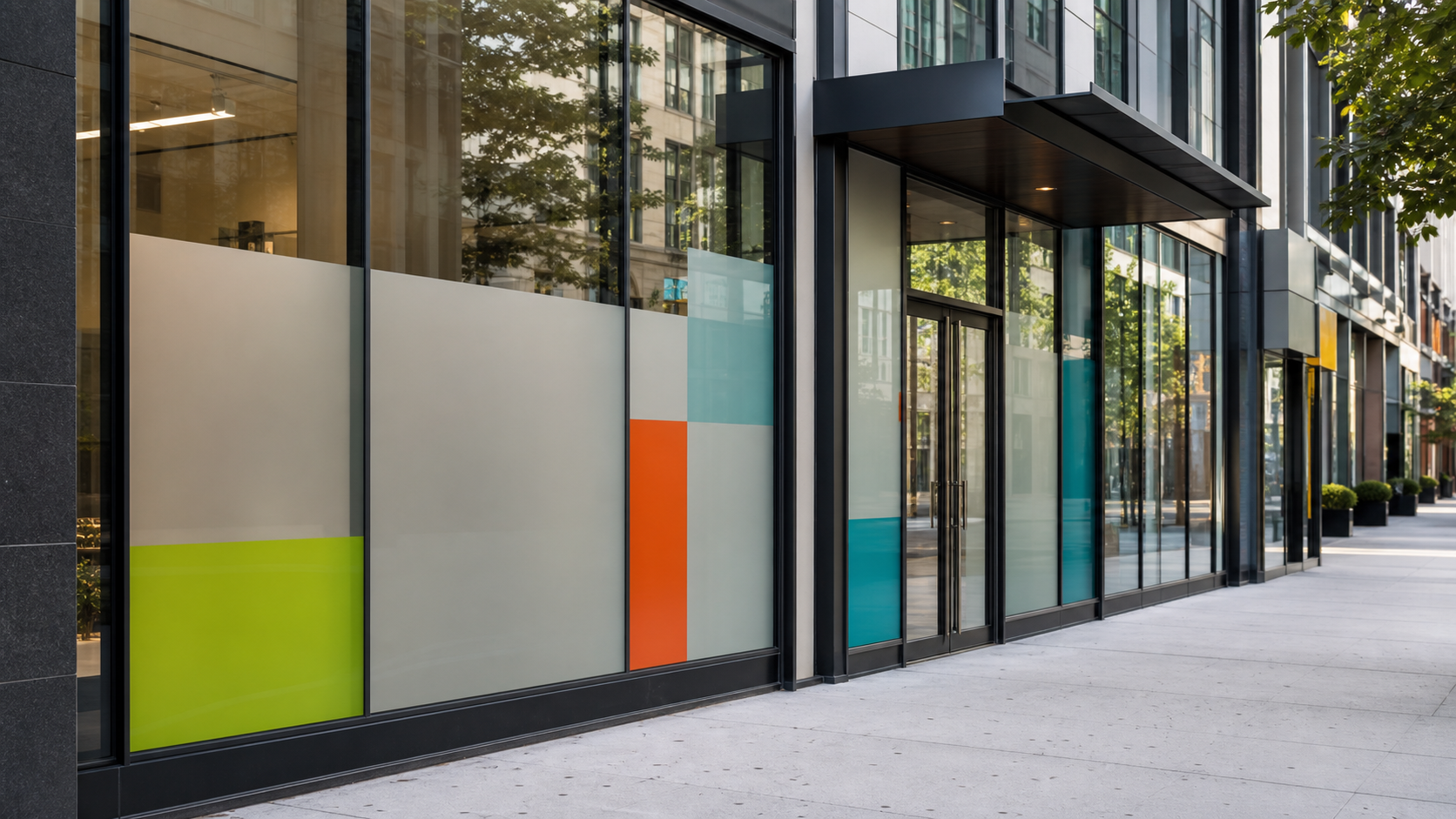
Frosted, patterned, gradient, and view-control films can manage privacy without making a commercial interior feel closed. The UNIQLO Heattech case study shows how specialty film can become part of a larger branded environment.
Prepare production-ready artwork.
Build art to the confirmed panel dimensions, include appropriate bleed, convert or package fonts, and supply linked high-resolution images. Mark each elevation and panel consistently so the production file, packing labels, and installation plan all describe the same location.
Send the details that make a quote useful.
Include quantities, panel measurements, site photos, installation address, target completion date, artwork status, preferred film behavior, and whether installation support is required. For common production and service questions, review the commercial graphics FAQ.